X (Twitter)



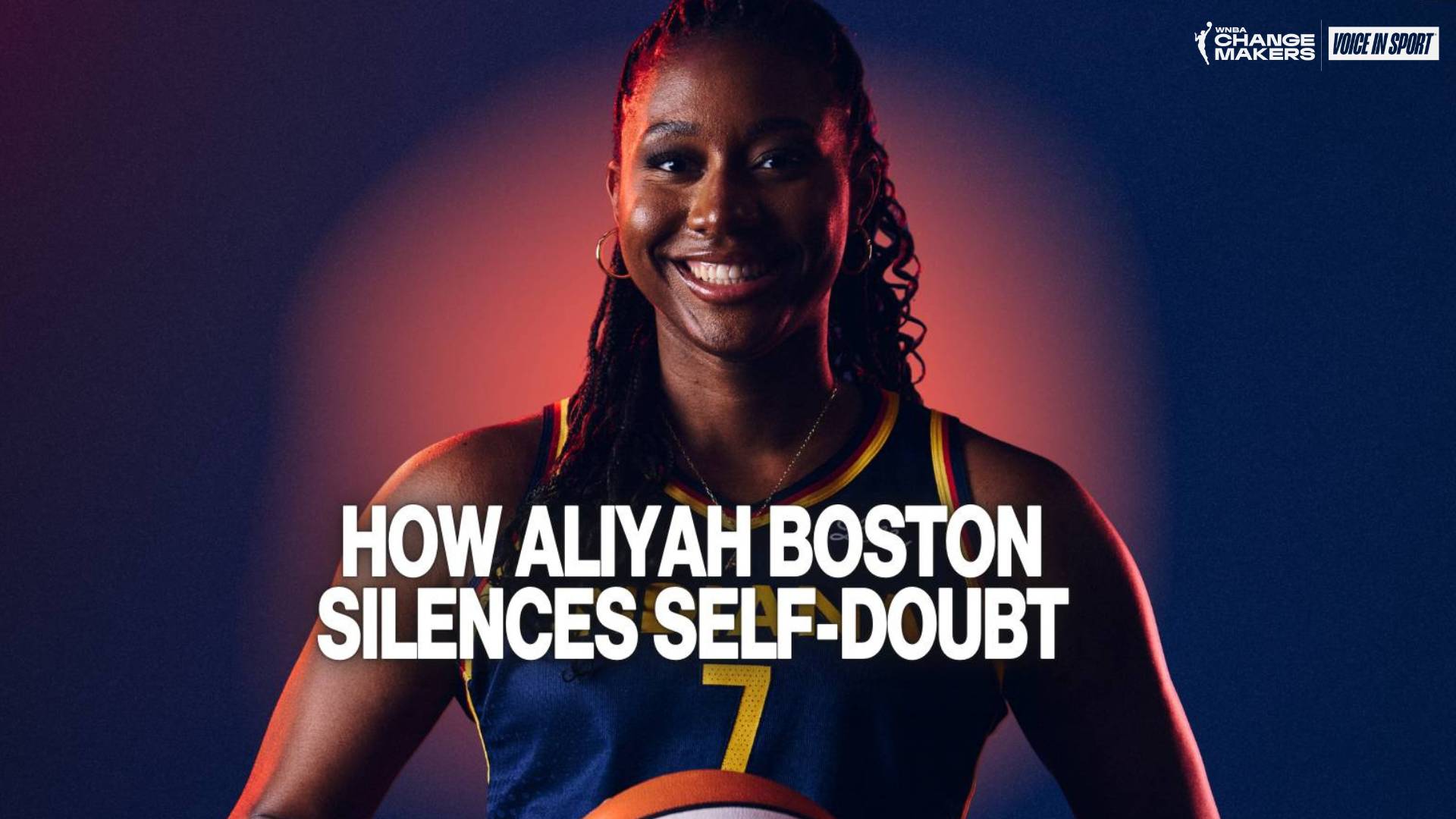
Before she learned how to silence the noise, Aliyah Boston almost succumbed to it.
Boston remembers one of her first preseason games as a rookie in the WNBA Indiana Fever, a 2023 matchup against Dallas and 6’8” post player Teaira McCowan. It was a welcome-to-the-league moment. Boston picked up two fouls in the first twenty seconds.
The game moved faster, the players were stronger, and the margin for error felt thinner than what she had played in the past.
After the game, Boston did what so many of us do. She checked her phone.
“There were so many negative comments about me,” Boston shared. “They were like, ‘she’s going to be a bust. She’s not good. She should have never been the number one draft pick.’”
In college, Boston had dominated. In the WNBA, she was adjusting to veterans who were older and more experienced than her. But, as it so often goes, social media cared more about the win than the context around Boston’s performance.
Pressure at our Fingertips
For Boston, the shock wasn’t just the criticism. It was the realization that the pressure followed her home. In the modern era, the crowd does not stay in the arena. It lives in your pocket.
And that was when she understood something many young athletes are still learning: she needed to protect her peace if she wanted to stay in the game.
For athletes, pressure compounds all components of the game. It’s more than the actual game they’re playing, and it never seems to dissipate, not even when they leave the court.
There aren’t many guardrails for athletes on social media. Fans feel like they have 24/7 access to their favorite women athletes. With such unfettered access, social media users can critique women players’ bodies, throw them off their game, and provide unsolicited feedback on their skills.
When Boston first joined the WNBA, she wasn’t prepared for this change in VISibility on social media, but she adapted quickly. “I completely took Instagram off my phone. I completely took Twitter off my phone,” she remarked.
Social media often reduces athletes to their performance, but we’re so much more than our stats. “Because we’re athletes… but at the same time, we’re still human,” says Boston
For perfectionists like Boston, these critiques are not just external, but also internal. “I have never been the best at positive self talk,” she says.
While some of her WNBA teammates learned to be their biggest cheerleaders, Boston had yet to learn this skill when she first joined the league. Without positive reinforcement and a positive inner voice, every mistake feels like an indication of our value as a person, rather than data that we can use for improvement.
“If you are downplaying yourself, it’s just like a pile… a weight that you continue to carry,” says Boston.
“Because we’re athletes… but at the same time, we’re still human.”
Managing your Inner Voice
Boston learned how to rewire her inner voice through conversations with her former teammate, Kelsey Plum
“She misses a shot and she’s like, ‘good shot, KP.’ I used to miss a shot, and I’d be like, ‘what’s wrong with you, Aliyah?’”
Most importantly, Boston has learned to separate herself from her ability “Whether I make a shot or I miss a shot, that does not define me.”
When criticism is loud externally and even louder internally, you are always bracing for impact; your enemy is yourself. Every mistake becomes evidence and every missed shot confirms the narrative already playing in your head.
For high achievers, especially perfectionists, that state can feel normal.
Many talented athletes learn to perform from pressure. They are used to operating in a cycle of self-critique. There is often a quiet fear that if you soften your inner voice, if you become kinder to yourself, you might lose your edge. That harshness becomes mistaken for discipline, and we often confuse self-criticism with drive.
But living in this state of self-combat is not sustainable.
Boston’s reflection offers another way. You can pursue excellence without punishing yourself. You can correct mistakes without attacking your identity. You can demand growth while still being on your own side.
For many athletes, that possibility does not even feel real until they see it modeled. Boston described watching a teammate respond to a missed shot with, “good shot,” and realizing that self-talk could be reframed. It felt unnatural at first.
But over time, it became freeing.
“Whether I make a shot or I miss a shot, that does not define me.”
Reframing Mistakes
Rather than beating herself up for mistakes, Boston has found freedom in being able to learn and enjoy the game. “It allows you to play so much more freely because you aren’t overloading yourself with all the pressure that you’re feeling naturally.”
For women everywhere, this sends a powerful message. “We are not defined by our sports,” says Boston.
You are a whole person outside of the field, court, or rink that you dedicate your life to. Mistakes do not make you a failure. Being kind to yourself will not hurt your game.
Positive self-talk, like sport, is often a life-long journey and practice. As we’re learning how to talk positively to ourselves, we have to learn to protect our peace by removing negative influences in our lives. For Boston, that starts with the social media critics. She turns off her comments and DMs so that no one she doesn’t know or trust has free access to her.
We all might find solace in different tasks that allow us to reflect. For Boston, that looks like a combination of journaling, reading, and relying on her faith.
She also recommends crying. “Sometimes all you need is a good cry session.”
Misconceptions and Dedication
For Boston, one of the most misunderstood parts of being a professional athlete is the assumption that everything is handed to her.
From the outside, fans see the draft night celebration, arena lights, and endorsement deals. They don’t see early fouls that shake your confidence, nights you replay missed free throws in your head, or comments that follow you long after the final buzzer. They don’t see the work it takes to show up smiling when your mind feels heavy or how often you push yourself in practice.
This partial view of an athlete’s life also leads audiences to feel entitled to comment on the athlete's performance and privilege.
There is also an unspoken expectation that because athletes live in the public eye, they owe the public constant availability or positivity.
“People think that we owe people things. We are people first,” Boston said. Behind every comment section is someone who has to choose what to internalize and what to release.
Athletes are not characters in an entertainment cycle. They are people navigating pressure in real time, in public, while learning to speak to themselves with more grace than the world sometimes offers.
And in that sense, Boston’s message extends far beyond the WNBA. Protect your peace. Guard your inner voice. Remember who you are beyond the scoreboard.
Because the loudest voice in your career shouldn’t be the crowd. It should be yours.