 X (Twitter)




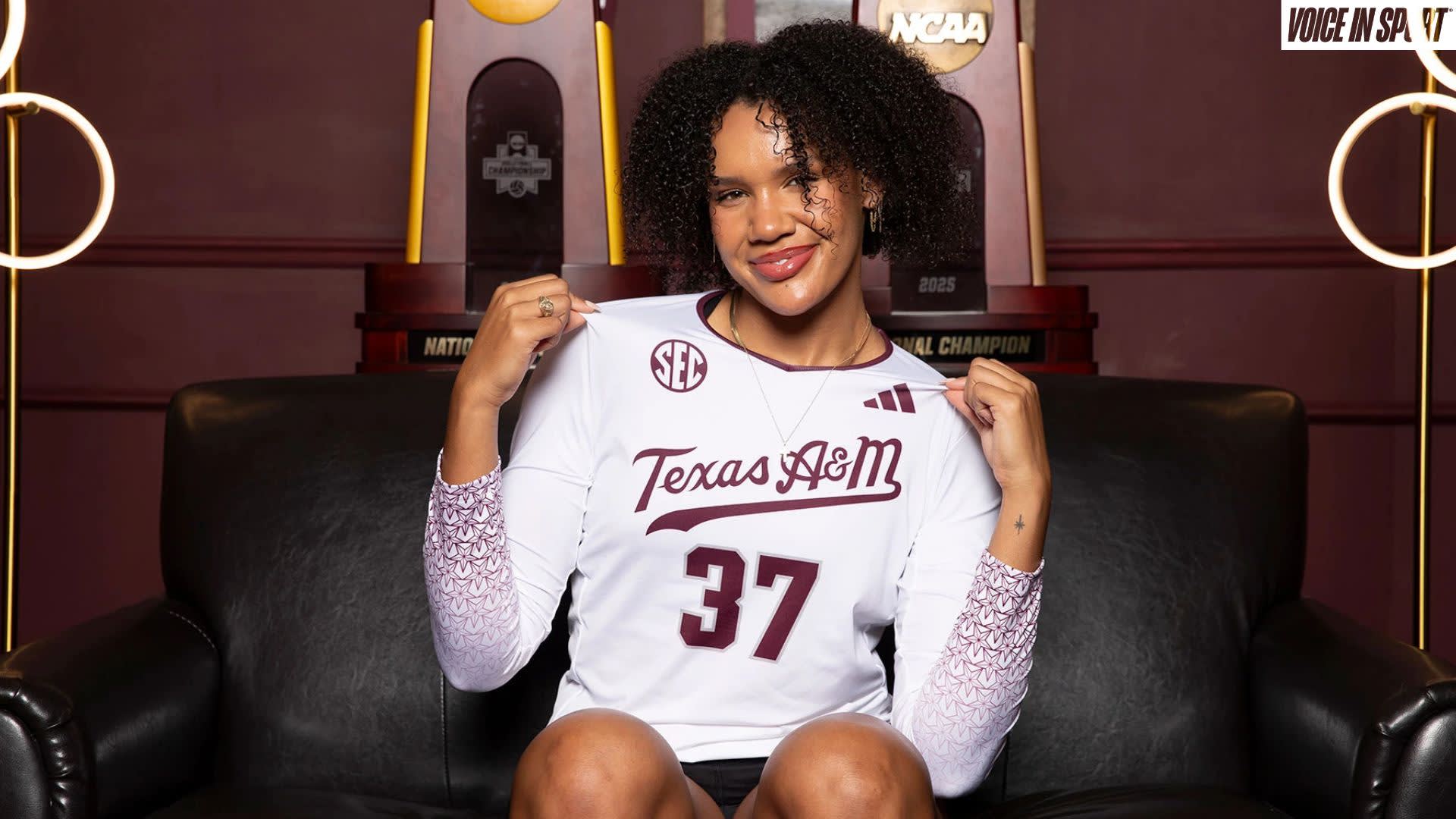
In the Spring of 2024, Kyndal Stowers sustained her fourth concussion over an eight month span, causing the team doctor at Baylor to call for her to medically retire.
But on Oct. 30, Stowers was back on the court, this time for Texas A&M, helping her No. 17 Aggies upset No. 6 Tennessee. Her on-court play looked effortless, but getting here was anything but easy.
After hearing that she could no longer compete for Baylor, Stowers spent the next year at home—a year that included watching the 2024 Final Four from her parents’ couch. During this year off, Stowers worked on volleyball skills, while also focusing on concussion-specific rehabilitation at the Andrews Institute in Plano, Texas.
Stowers knew her journey in volleyball wasn’t going to end there, so she decided to enter her name into the transfer portal. Then, Texas A&M came calling. At this point, the concussion symptoms that had stayed with her since Baylor were gone, and she was cleared to play by her personal doctors.
"I would never have put my daughter back out on a court if I thought it was not safe for her," said Kyndal’s mom, Tina Stowers. "We definitely got plenty of clearance from a lot of people that know better than I do. And then it just kind of worked out."
Repeated concussions can lead to increased risk of depression, anxiety, mood swings, and brain fog. In the most serious cases, someone could develop Chronic Traumatic Encephalopathy (CTE), which is a degenerative brain disease linked to multiple head injuries and concussions.
The medical staff at Texas A&M were dedicated to keeping her safe, so they determined she would play wearing a Q-Collar in efforts to prevent any further concussions. A Q-Collar is a c-shaped device that is worn around the neck to help protect the brain.
“The Q-Collar is a simple and safe device that applies light pressure to the neck. This pressure causes a partial occlusion to the jugular veins and a slight increase of blood volume inside the head, and helps reduce the brain's movement upon impact, which is the primary cause of brain injury,” according to the Q-Collar website.
Stowers is not the only top athlete to rely on the Q-Collar to perform at high levels.
2015 Women’s World Cup champion and two-time NWSL champion Meghan Klingenberg has been a user of the device since 2019—before it was even released to the public.
“If there’s one thing that I could say to youth athletes, it’s that I wish I had this opportunity to wear a Q-Collar when I was your age,” Klingenberg said. “I’ve done a lot of headers and had a lot of elbows to the head that I wasn’t protected… I think that the Q-Collar is a game-changer for youth sports. Now you have the freedom to go out there and be you, be exactly who you want to be on the field and off.”
Since wearing the Q-Collar, Stowers has remained concussion-free, while being a key piece on the Aggies squad.
In the 2025 season, Texas A&M went 29-4 en route to a National Championship—the first in program history—and Stowers recorded 385 kills through the season, a mark that sat second on the squad.
Across the Final Four and Championship games—a place the team reached after taking down previously undefeated Nebraska in the Elite Eight—she combined for 26 kills, helping her earn the Most Outstanding Player of the Women’s Volleyball Championship.
“There was a point a year and a half ago when I was trying to figure out if I even wanted to keep playing or not,” Stowers said. “I was praying about it, and I had this image where I was looking at the back of my head, wearing a jersey and confetti was falling around me. I think that’s kind of crazy.”
“There was a point a year and a half ago when I was trying to figure out if I even wanted to keep playing or not. I was praying about it, and I had this image where I was looking at the back of my head, wearing a jersey and confetti was falling around me. I think that’s kind of crazy.”
Her story caught national attention, eventually leading to her being a finalist for the Best Comeback Athlete award for the 2026 ESPYs. Although she did not win, she has continued to cement her legacy in College Station.
The 2026 Aggies are currently 14-8, but boast back-to-back wins over top-10 opponents, taking down No. 4 Kentucky in straight sets on October 25, and No. 6 Tennessee 3-1 on October 30. Stowers led the attack in both games—just as she has all season—recording 16 and 19 kills, respectively. Through the year, Stowers leads the squad in kills, kills per set and points per set, with marks of 279, 4.43 and 5.1, respectively.
With Stowers’ collegiate career salvaged by the science of the Q-Collar, she has a few more years to show what she can do. And if the comeback story continues on the path it has, Texas A&M and Stowers will only grow into bigger threats.
“I don’t think anybody else would believe this story unless I lived it,” Stowers said.
