 X (Twitter)



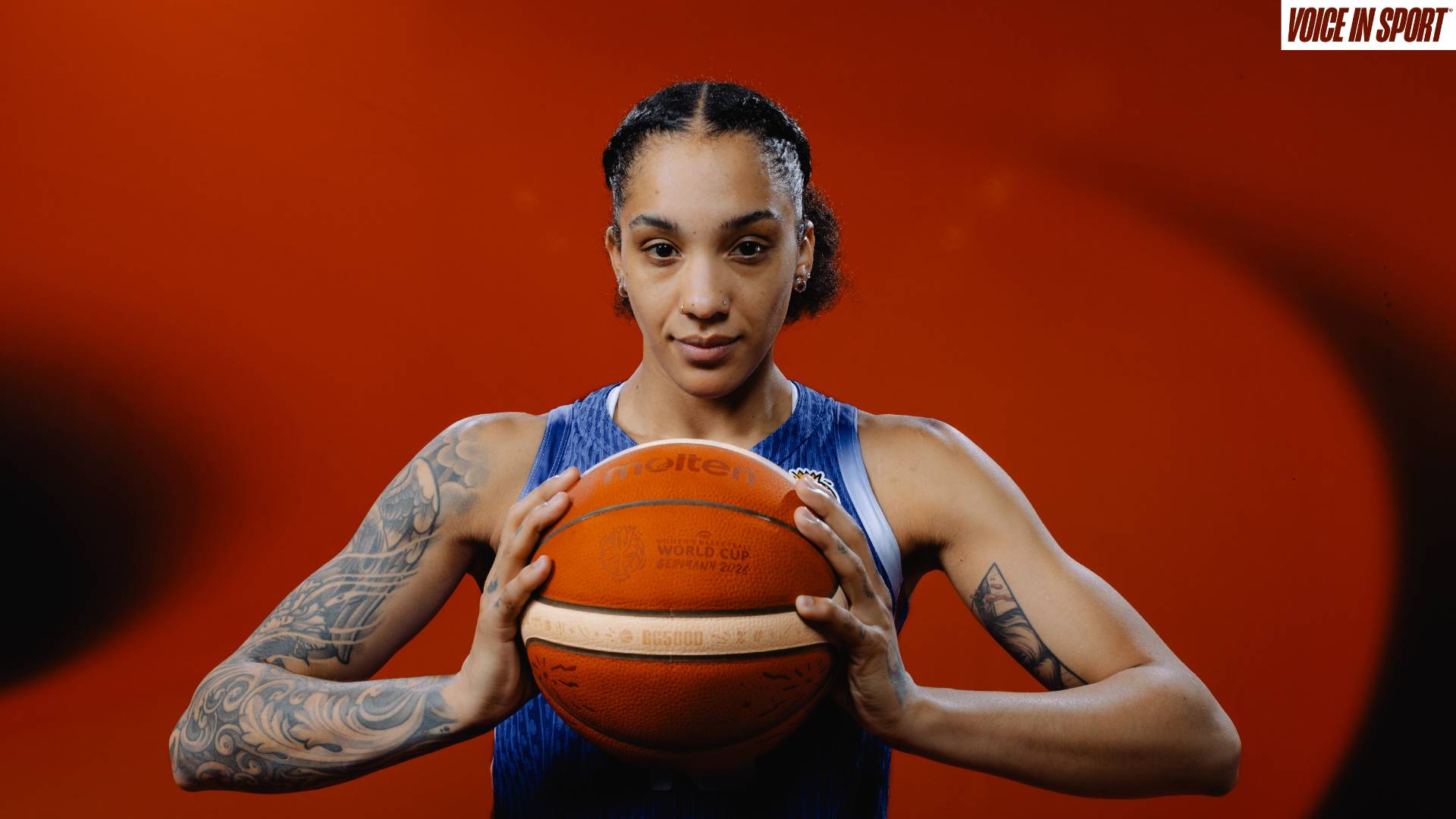
The difference between Olympic silver and a chance at historic gold came down to a single centimeter for Gabby Williams.
At the final buzzer of the 2024 Paris Olympic Gold Medal Game, Williams launched a desperate, fading shot that banked in off the backboard. The home crowd erupted, believing their superstar had forced overtime against the United States. But the floor told a harder truth. Her sneaker shaved the line, turning a potential game-saving three-pointer into a two. France lost 67-66.
For two years, Williams carried the feeling of being that close to gold without ever getting there. Then, she returned to the international stage with a chance to write a new chapter with France, this time at the FIBA Women’s Basketball World Cup.
From One-Centimeter Loss to World Cup History
Stepping onto the hardwood in Berlin, Williams took on a new role as the newly named captain of Les Bleues. She became the first active WNBA player to captain France at an Olympic Games or FIBA World Cup since 2014.
France had never reached a World Cup final. Williams helped change that.
She led France through an undefeated run to the championship game, including a 22-point, five-rebound, five-assist, four-steal performance in an 86-64 semifinal win over Germany. The performance moved her past French legend Céline Dumerc and into third on France’s all-time scoring list at the World Cup, with 187 career points in the competition.
Waiting on the other side of that run was a familiar opponent: the United States.
France came out firing, building a 14-point lead in the first half and putting the Americans on their heels. Williams finished the game with 20 points and seven assists, but the U.S. eventually rallied to win 97-79 and claim its fifth consecutive World Cup title.
The loss was disappointing, but it could not erase what France had already accomplished. For the first time in history, France had reached the World Cup final and secured its first World Cup medal since the inaugural tournament in 1953. Williams was also named the 2026 FIBA World Cup Best Defensive Player, but the silver medal still left her wanting more.
“I just told my teammates not to put their heads down tonight,” Williams said. “We have a lot to be proud of, but I think we’re gonna remember how this feels.”
Waiting for France
Williams’ connection to France started long before she became the team’s captain.
Born and raised in Sparks, Nevada, Williams’ connection to France was preserved by her Parisian grandmother, Angela Bishop, who lived just down the street. Starting at age six, Williams sat with her grandmother over workbooks and computer games, learning to speak French. One childhood assignment involved writing a letter to her great-grandmother in Paris, expressing her desire to someday visit and trace her roots.
Despite holding dual citizenship from birth through her French mother, Thérèse, stepping onto the court for Les Bleues required navigating strict international sports rules. FIBA rules allow only one naturalized or dual-citizen player on a national team roster at a time, and the French program already had established veterans occupying that spot.
Williams had to wait.
She spent years in an isolating, liminal space—feeling too American in Europe and too international in the United States. While a college standout at UConn, USA Basketball invited her to a training camp in 2017, but she never played in an official senior FIBA event for the Americans. She held out for her true dream.
When her window finally opened ahead of the Tokyo Olympics, she seized it, though the choice came at a major professional cost.
In 2021, when Williams left her WNBA team, the Chicago Sky, mid-season to attend France’s mandatory training camp, the franchise placed her on the suspended list for the rest of the season. Frozen out of her primary market and sacrificing financial security, Williams stood her ground.
“The second I put on the French jersey for the first time, it was completely worth it,” Williams told ESPN in 2021. “I'm so close with my mother, and this has been something really cool for me to learn more about her side of the family, since I grew up in the States.”
“The second I put on the French jersey for the first time, it was completely worth it. I'm so close with my mother, and this has been something really cool for me to learn more about her side of the family, since I grew up in the States.”
Two Different Roles
In the WNBA, teams treat Williams as the ultimate “Swiss Army knife.” Now with the Golden State Valkyries, she operates as an All-Defensive anchor, a slashing threat and a facilitator. Historically, she has filled whatever gap her franchise needs, sometimes sacrificing personal volume for tactical fit.
“I just try to mesh,” Williams said of her WNBA game. “I don’t like to put myself in a box or describe a certain thing I do or what kind of player I am; I just try to help the team in any way I can. I get the Swiss Army Knife analogy a lot, and that’s the type of thing I try to be.”
With France, her role is different.
France positions Williams as a central part of its offense. At the 2026 World Cup, she helped break down defenses with her aggressive downhill game and drive-and-kick playmaking. She has more freedom to create than she does as a complementary piece on an American super-team. She is one of the players France turns to when it needs to make something happen.
Finding Her True Identity
With the French national team, Williams has also found a sense of belonging that eluded her growing up.
“My whole life... I never really fit in anywhere,” Williams shared in Berlin. “But learning how to make that my strength, not being shy about it, and loving that part of myself.”
Her French teammates still playfully tease her about her American-accented French, but they have embraced her as a cultural and competitive center. Williams has described this roster as the closest team she has ever been a part of, built on an environment of vulnerability and mutual empowerment.
“This was an easy group to lead,” Williams said of her teammates. “It was obviously intimidating being given this role, given this pressure, but I think just with this group it was very easy. I just wanted to pour into them as much as I can and make them feel as confident, because I really do still believe in every single person on our roster. I just want them to believe in themselves.”
Coming for LA 2028
Williams’ story has evolved far beyond the agonizing margins of a single buzzer-beater. In Paris, one centimeter separated France from a potential Olympic gold medal. In Berlin, Williams helped lead France to its first World Cup final.
The second silver medal still hurts. As Williams left the arena in Berlin, she took the medal from around her neck and held it in her hand, visibly frustrated. Despite making France Women's Basketball history, the tournament still ultimately ended with a loss to the United States.
“Of course we’re disappointed right now, but I think we’re showing little by little, France is a basketball country,” Williams said. “That was my goal, when I joined this team ... to change the culture. Obviously we have higher expectations, but we’ll get there.”
The job is not done. The next opportunity comes on American soil. At the 2028 LA Olympics, Williams and Les Bleues will have another chance to turn heartbreak into gold.
