 X (Twitter)



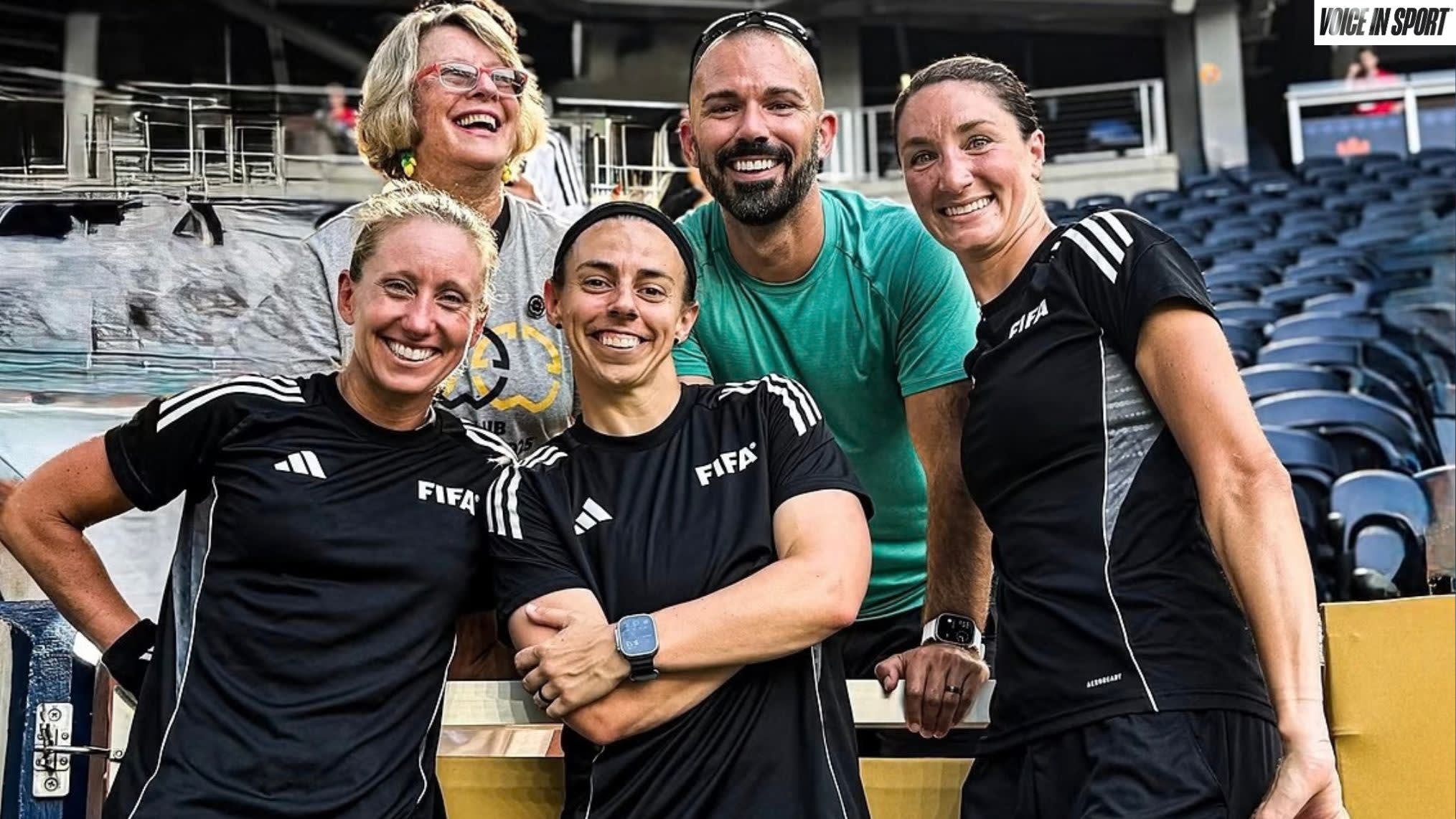
During the 2026 Men’s FIFA World Cup, the second-ever all-female officiating team in tournament history, composed of Tori Penso, Brooke Mayo and Kathryn Nesbitt, took the field as the world watched.
This marked an important milestone and helped young girls recognize that officiating could be a future career.
But that doesn’t mean the road to becoming a professional referee is easy. FIFA referees Tori Penso and Alyssa Pennington, and assistant referee Kali Smith achieved this feat through hard work and perseverance, as well as support and mentorship.
Penso’s Journey
Penso began refereeing at the age of 14. She went to Olympic Development Camp in Alabama when she was 18 and continued to officiate as she played soccer at Florida State University, graduating in 2008.
Since then, Penso has officiated in a variety of leagues from the NWSL to MLS, and has served as a role model for young girls as the first American woman to serve as a men’s World Cup center referee.
Smith’s Story
Smith also got her start early, beginning at age 12 alongside her dad. Her three younger sisters were all involved in officiating as well. Despite having limited time as a Track and Field Athlete at Utah State from 2008-2012, she still refereed when she could.
After college, she considered quitting refereeing altogether. That was until she discovered a pathway to becoming a professional.
In 2018, Smith was an assistant referee in an NWSL game for the first time, and 2019 was her first year with the Professional Referee Organization (PRO). She has officiated for the MLS since 2023, the same year she earned her FIFA badge.
Pennington’s Journey
Pennington, who began refereeing at age 17, initially got involved to make some extra money. She continued throughout college, earned her FIFA badge in 2023, and has served as a center referee for MLS since 2025. She has officiated NWSL, USL and NCAA games, as well.
Becoming a referee seemed improbable at first because of the lack of women referees at the time.
“When I first started refereeing, we didn't have any active female [center] referees in Major League Soccer,” Pennington said. “So my goal was like, ‘I want to be there,’ but it was a huge goal because at the time I didn't really have a role model or somebody to look directly to.”
“When I first started refereeing, we didn't have any active female [center] referees in Major League Soccer. So my goal was like, ‘I want to be there,’ but it was a huge goal because at the time I didn't really have a role model or somebody to look directly to.”
Mentorship is Key
Pennington’s biggest piece of advice is to find a strong mentor who can watch and give feedback. A mentor can also provide a sense of stability, she said.
“When things get tough, because they will, there are going to be situations that they will encounter where it won't feel good, or they won't like it, or they may feel sad, or frustrated, or discouraged,” Pennington said. “But having that mentor to ground them to remind them of who they are, even outside of officiating, is really beneficial.”
Pennington added that Penso has been an important role model for her since they met in 2018 at a youth tournament.
Smith suggested taking advantage of opportunities to talk to referees with more experience in order to make the most of what you can control, like being mentally prepared and knowing the rules.
Penso emphasized that mentorship is important across all disciplines. She said it is crucial to learn how to advocate for yourself, ask for guidance and set goals.
Proving Yourself
While there are a growing number of women referees, women can still face unique challenges in the male-dominated field.
Smith said after having a baby, she was told by a male referee, “Well, once you have a baby, you're never gonna be able to pass a fitness test again.”
She was also told by another referee that she was only getting certain opportunities because of her gender.
Pennington also said that because people aren’t always used to women officiating games, they might be more prone to criticizing the decisions made by women referees.
Penso said she had to overcome a lack of opportunities for women. When she was growing up, there was no professional women’s soccer league, so Penso did not have the same opportunity to play at a high level and develop her technical understanding of the game.
Investing in the Next Generation
Penso said she hopes to show young girls that officiating can be an opportunity for them.
“We are proof that dreams are possible,” Penso said. “If you put enough focus and determination and grit and perseverance all together, and focus on the opportunities that exist for you, anything is truly possible.”
Smith and Pennington also said continued investment in women’s officiating can help young women see officiating as a career.
Pennington said encouraging women who are no longer active players can be an important step in growing the women’s side of refereeing. And according to Smith, even though there is still progress to be made, women’s officiating is on the right track.
“Some of those [women] have already paved that path,” Smith said. “They're showing that women can do some pretty amazing things if given the opportunity.”
